Military service and the middle of America…

About 11 percent of West Virginians are veterans. In my family of origin, 33 percent are vets. Dad served; me and mom, no. See, numbers are tricky.
But I thought maybe census data could explain Beckley, West Virginia, the place I spent veterans day. In the U.S., less than 10 percent of the population over 18 has served in the military, so it seems meaningful that West Virginia beats the average and Beckley, West Virginia, is home to an even higher number—12 percent of the population has served.

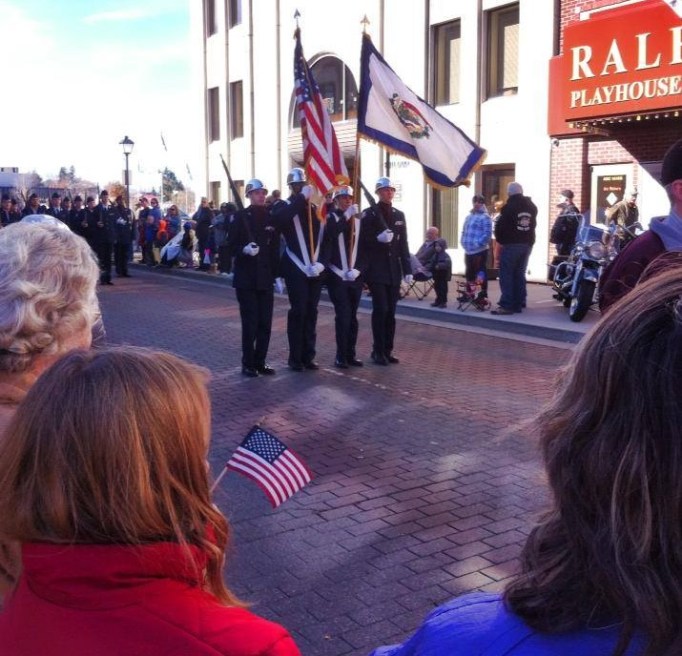
flags at the parade
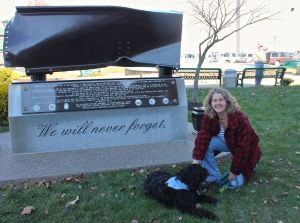
Lori and Colby in Beckley
In New Jersey—where I grew up and where my dad the Navy vet still lives—when you say “veteran,” chances are you’re talking about a senior citizen. A third of the vets are over 75. No one gets drafted anymore, so it’s not surprising that the number of older vets is higher than younger ones—back in the day, service wasn’t a choice.
But when you say “veteran” in West Virginia, there’s a better than average chance you’re talking about someone who has served in the current generation of soldiers—someone who joined since 1990, who is younger than, say, me, who has been to the Gulf and Afghanistan.
In a way, the numbers show how our country is becoming two places, and the gulf between us is widening. Why do more people serve in towns like Beckley, West Virginia? Job opportunities play a part, and so does the truth that people here are much more accustomed to guns in general; walking in fields with rifles starts young.People here will tell you, though, that it’s in the culture, to serve. It’s a growing part of what is valued. God and country and family: take these things seriously.
None of that is especially surprising, I know.
But what I’ve felt, as I’ve traveled through places like Missouri, Kentucky, Iowa, Indiana, Ohio, and now West Virginia—all places where better than 10 percent are veterans—is that when people believe things in these places, they believe with whole hearts. Whole hearts, made-up minds, determination.
And numbers can’t back me up on the “why” part of all this but still, I sense that the need to believe in something is great here for good reason. The need is great enough to match the size of some great and very visible disappointments.
There’s the thing: look at the shrinking populations, the lost industries, the abandoned properties all over the landscape. Look at methamphetamine. Seriously, don’t close your eyes to that. Look at the downtowns that were built when America was young and believed in itself, and how they have been emptied, gutted, abandoned. What is left as proof of our character—something we can recognize and understand?
Military service is a higher calling of sorts and it doesn’t mess around, just like Jesus doesn’t mess around, and wedding vows are meant to last — 22 states (including West Virginia and all the other states I listed above) have introduced “covenant marriage laws” to keep it that way; three states have such laws on the books.I believe I understand some of this.
I feel that craving for higher purpose viscerally—as in, when the color guard comes down Main Street and the high school marching band bangs out God Bless America and chubby girls spin their flags, I start to cry.
Yeah, I actually do cry and I can’t help it.
The need to believe is great. I feel it too. Where I begin to drift away—drift back home, back East, where patriotism seems too lock-step for people more comfortable with books than guns—is on this little detail: Killing. Violence in the world is not a healthy thing for us to count on, in terms of building American self-esteem.
When will it be possible to believe in something that builds us up? Like, maybe, teaching? Like, maybe, love?
Scamp attack

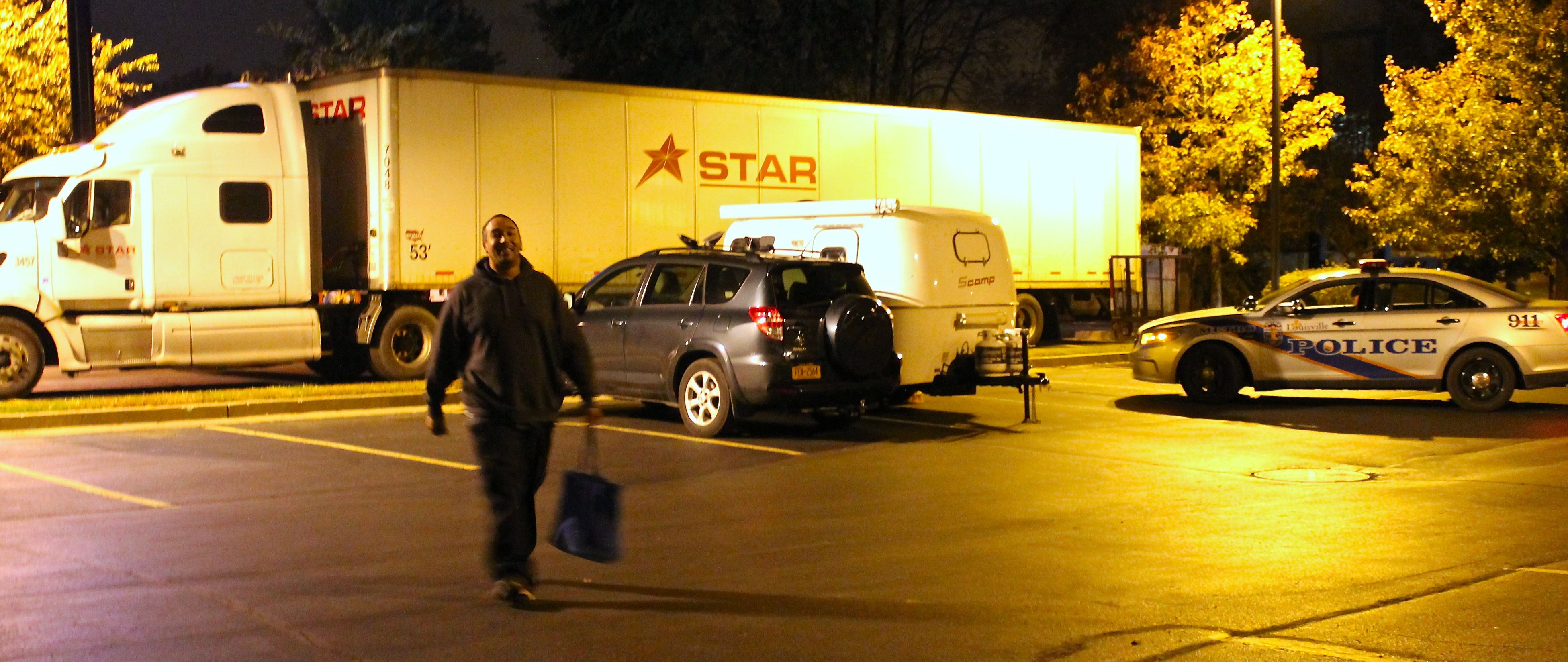
The Victim and the Crime

Hero trucker

He made the call that saved my Benadryl.

scamp haul

The booty from the Scamp bust.

Thump thump thump.  It’s 5:38 a.m. “Louisville police.” Thump thump thump.
I’m dreaming of something scary anyhow so this pounding on my door at the Baymont Inn sort of blends in and it takes awhile for Louisville’s finest to rouse me. As the fog lifts, the first thing I think is, “did I do something?” Seriously. I run my night of baseball watching and BBQ eating through my brain.
“Lori? You in there? We need you to open the door.” I think it over. My conscience is clean. Colby, my watch dog, is still asleep—we have a king-sized bed with feather pillows, so, count him out for anything.
“Okay, I need to see badges,” I say, looking through the peephole (through which, in truth, I can see nothing but I want to sound like I know how this is done.)
“We’re in uniform, ma’am.”
“Right.” I open the door. The police in Louisville, Kentucky—at least the ones who draw the overnight shift on a Sunday–are apparently all fresh-faced, young, competent, and just totally adorable. In the next 30 minutes I’ll meet about 10 of them and they will all be so nice and good looking and, like, capable and focused and everything, I will want to be protected by them always. I don’t think the pair at my door smile as I stand there in my jammies but even hours later, I recall a sense of wanting to invite them in for a PJ party.
Anyhow, the crime: I’m in a city, so, I had taken a motel room and parked my Scamp out back, where it would be safe.
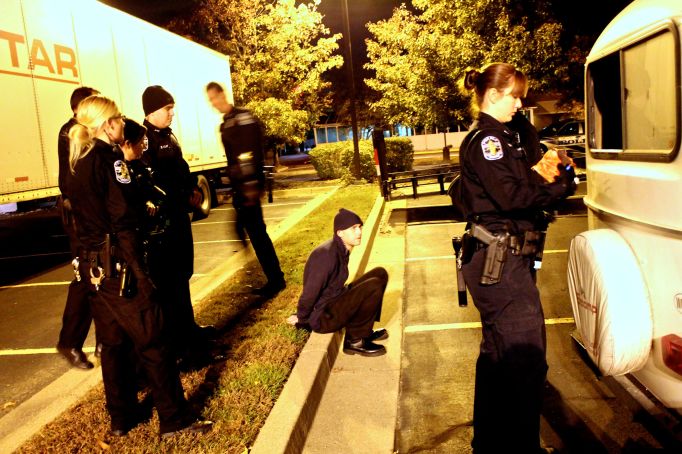
“Someone broke into your trailer, ma’am, and we need you to come see if you can identify any of the stuff the perpetrator took from it.” I can’t be certain they said “perpetrator” but anyhow, they tell me they got the guy; he’s been arrested and is outside. A trucker who had been sleeping in his cab saw someone climbing into my trailer and called 911; a couple minutes later it was over.
The burglar is sitting on the curb in the parking lot, cuffed. He is gangly and lean. Down there so near the ground, his knees seem to be up around his ears. He is in his burglar outfit: all black clothes, hoodie up over his head, black shoes. He is clean-shaven and young and makes me think of my students, sort of a young dopey kid with a hangdog expression. He says, “I’m real sorry that I done got you up out of bed, ma’am.”
I don’t really know what to say to this. It can’t have totally sunk in that he is going to jail now. I want to say something; I want to interview him, actually. But standing out back of the camper at 5:41 a.m., seeing that all he took from me was a box of Benadryl, and seeing that every police car in the city seems to have come down here because my Scamp—so easily violated, but don’t worry, I fixed that—has been burglarized, and the excellent servants of Louisville cannot let that stand… seeing this scene, what I feel is pity. Really.
I want to say I feel sorrow or anger or even curiosity and that I feel the perpetrator is worth a few questions on my recorder (which, with camera and notebook, reflexively I brought outside) but that is not how I feel. I just think this is pathetic. One of the cops even says that if I plan to write about this, I ought to add a chase and a shootout.
“These your things ma’am?” an officer asks.
“Yes—that’s my Benadryl, and that’s my jewelry bag.” The mention of the jewelry bag, which is empty, creates a flurry of activity and some shouts and various threats to the burglar idiot to cough up what he’s obviously hiding but, as it turns out, he didn’t take my jewelry. Just the bag. The jewelry is still in the trailer.
“It’s not like there was nothing in it worth much,” he says. “Nothin’ personal about your jewelry, ma’am.”
The police took him away, presumably to book him and for him to then enter a plea, presumably guilty, and then presumably for him to bargain his way back out of the charges so that he will be free to try this again and next time, he’ll be more careful, I should think. The police wrap things up and I am left there feeling like it should not seem so petty, and so pointless, stealing little pills to make harder drugs from them (because methamphetamine comes from cold pills, as surely we all know by now). I am left there thinking that even I could be more criminal than that.
I felt sad for hours. Then it was time to move on.

No More Sleeping Around!

IMG_2444My wanderlust is almost shameful. I desire nothing less than to try every town on the map, and Colby doesn’t mind too much, so long as I feed him wherever we go, and so far I always have.

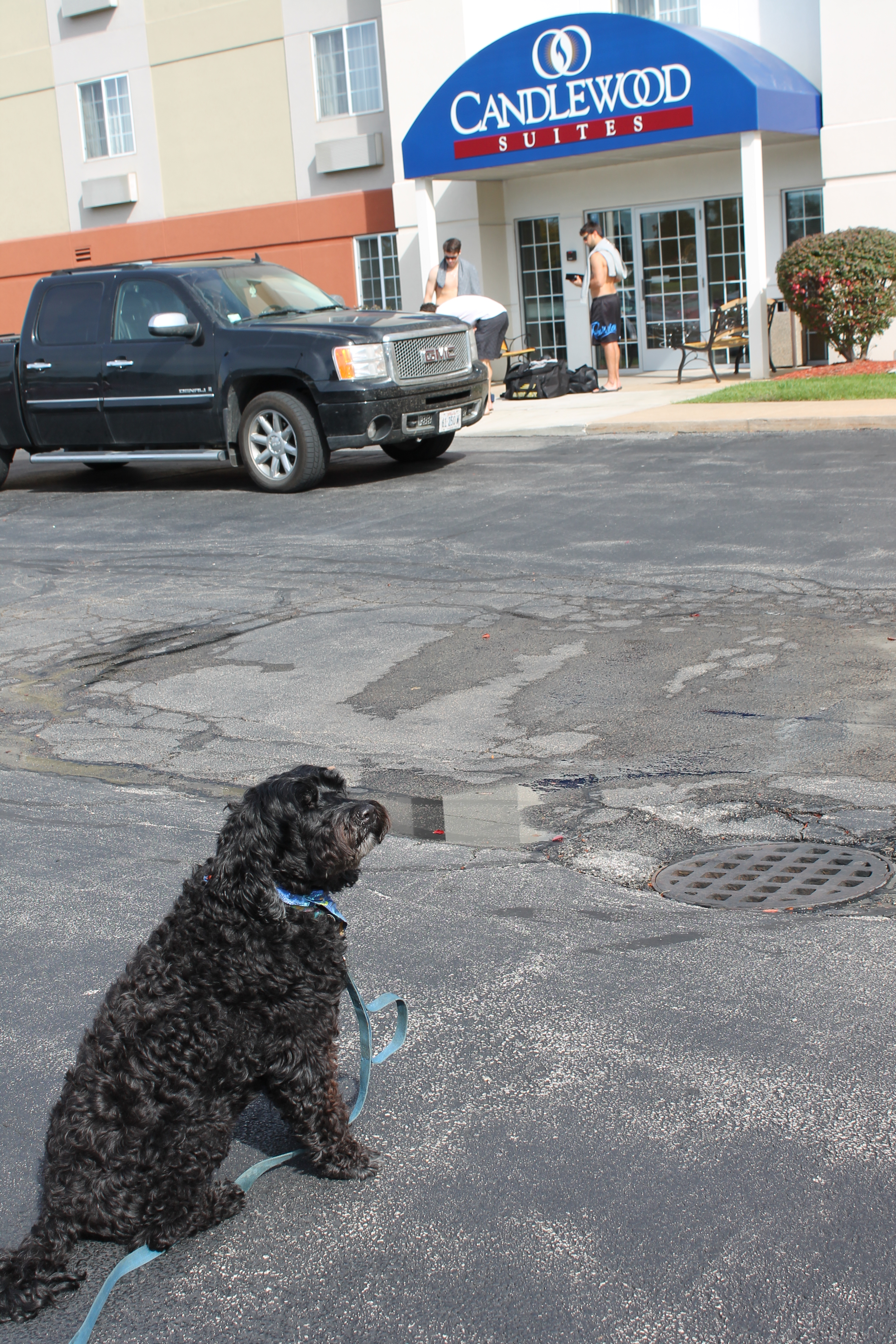
Here is a list of places I’ve slept since Sept. 8: St. Johnsville, NY; Buffalo, NY—Motel 6, Silo City, Best Western; Allegheny National Forest; Oil Creek, Pa., Family Campground; Washington, Pa., KOA; Monroeville (Pittsburgh) Holiday Inn; Akron, Ohio; Rockford, Ill., Comfort Inn, Candlewood Suites; Mark Twain Caves Campground, Hannibal, Mo.; Columbia, Mo., in a real house; Hickory Haven Campground, Keokuk, Iowa; Milwaukee; NYC; Utica, N.Y.; back to NYC; back to Milwaukee; Lasalle, Ill.; Sullivan, Ill.

This reminds me of learning that Magic Johnson had slept with more than a thousand women; I always wondered how many days or years he spread that across. I mean, in 20 years, a tally of 1,000 women is not quite so epic for a guy who is clearly not shy. But fitting 1,000 into one highly active year? That would be madness.

A road trip can feel a little chaotic like that and it is time, I think, to consider a new strategy of campsite fidelity. Monog-campy.  How unlike the amped-up dash of Kerouac, moving the same way he typed—one long, taped-together sheet of paper threading through the typewriter, letting the words roll on and on like the road he traveled down with his stimulant-fueled consorts.

But let’s be real human beings for a moment. Remember: Each time Scampers such as  Colby and I move, it involves four basic steps:

  1. selecting a new destination, which means poring over maps and checking event calendars online and reading the reviews of campgrounds, plotting a course, making a reservation…
  2. Breaking down camp and hitching up the trailer, which I’m getting pretty good at but which still takes me at least five tries before the ball lines up right under the hitch (I’ve learned that the scamp is light enough for me to pull or shove it the final inch, though),
  3. Getting to the new place, and
  4. Setting up camp again.

I have decided to set up camp where I am for awhile, detach the trailer, and dash out for some day trips. It will be easier. And truthfully, it would be better for Colby, who is a creature of routines, and likes to feel grounded, I think. Every time I start to pack the car again, the look on his fuzzy face says, “really?”

I shouldn’t expose the boy to my geographic infidelities. We will sit. Stay.

Road Trip 101: Move with Purpose

Colby and I are on a mission to see dozens of American towns and cities that boomed when America was experiencing its industrial age, and that have since hit bad times. We are touring the rust belt, the coal belt, the Bible belt… we want to see places that have fallen apart.

Don’t go getting all goofy about road trips and freedom and following your bliss and all that; when you travel you need to have a mission. You can digress, you can detour, you can show up late to appointments you’ve made with yourself, but if you set out with no idea where you’re going or why, you’ll regret it.

I can’t say I learned this the hard way because there was really nothing very difficult about it. I’ve just wasted a lot of time wandering aimlessly over the years and by now, I know better. Wandering is a travel style, not a travel purpose. You need to move with purpose. You need to have a destination or a series of destinations, and if you fall off track then that’s part of the adventure, as in, “I was heading for Des Moines but then Peoria was so awesome that I stayed there for a week.” Had there not been a plan for Des Moines in this example, Peoria would lose its status of fantastic sidetrack and become merely some place in Illinois where you got stuck, and that’s sort of pathetic. There are other reasons why you need to have a solid purpose in your travels, but that’s one and it’s enough to make the argument: Have a plan.

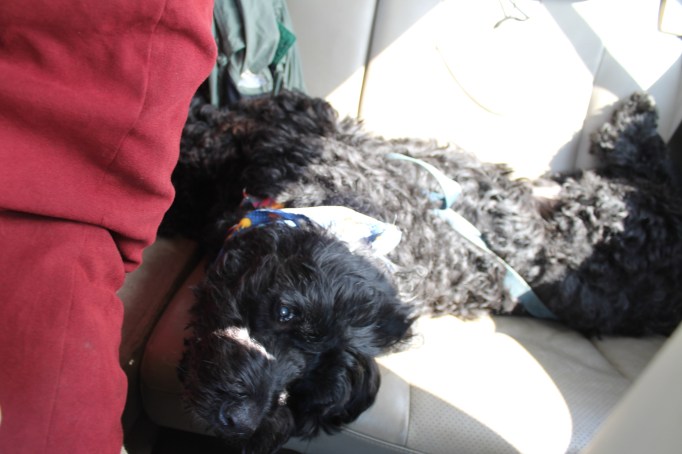
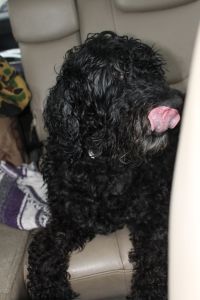
Colby

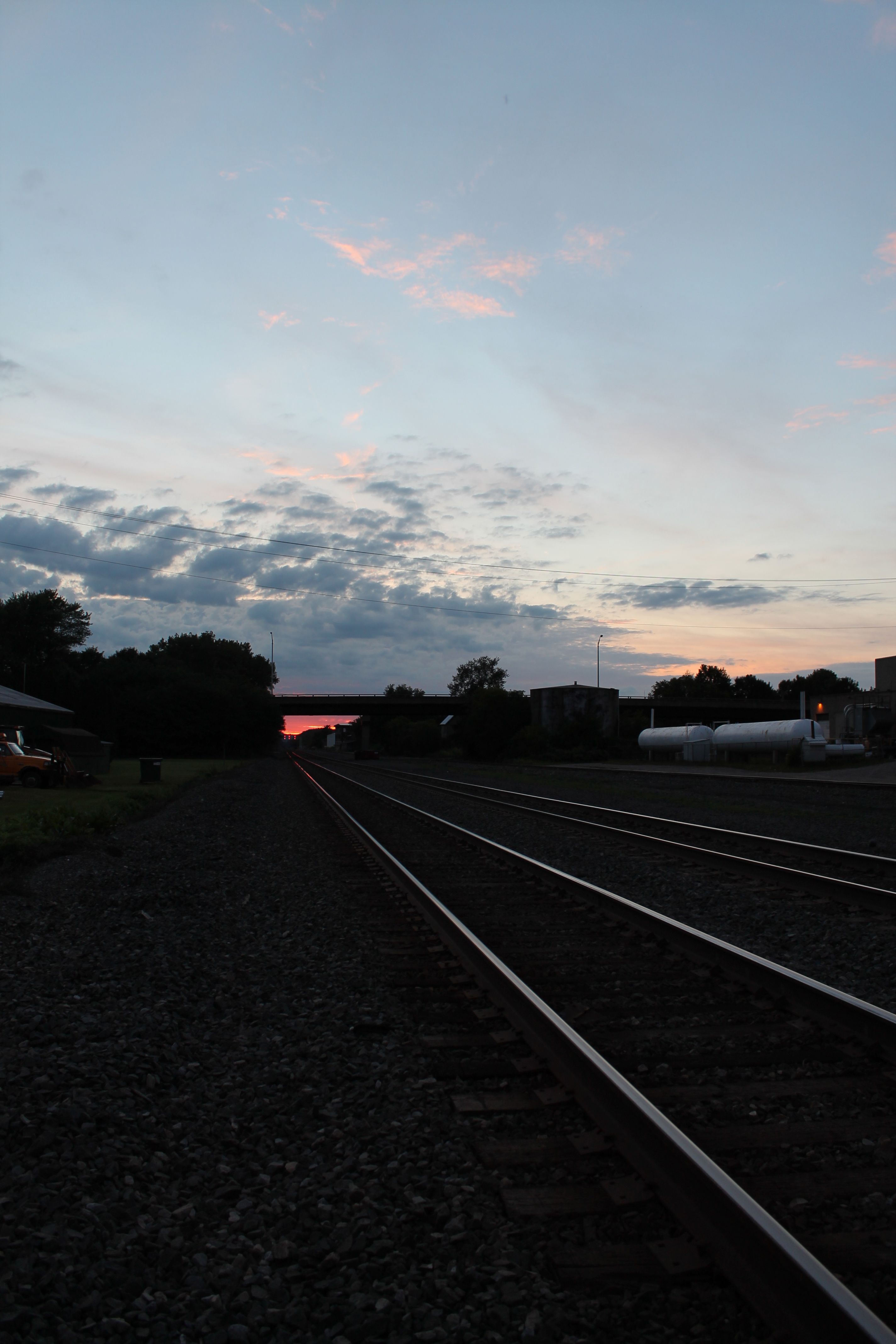
sunset road

In fact, Colby and I have a number of “purposes” for this trip. The cities are simply giving us a framework. We are, for one thing, going to spend about 10 weeks together, just about all day every day, and that is something that means a lot to me. My dog is 14 years old. He is one of the great loves of my life; I can’t imagine life without him. When my friend Katherine, who was his breeder, handed Colby to me, I remember her saying “I am so happy for you. You’re about to discover one of the best kinds of love.” She was right. The time I can spend with him now might make up for all the days when I had to stay late at work, or was too busy to really care for him, when I took him for the most uninspired walks or fed him late without apology. He’s a spry 14, and handsome as hell, and good company. I’m lucky to have this time with the guy.

I have a selfish purpose for taking this trip, too. I want to feel lonely. It’s working already; as I write this, I am experiencing loneliness even with Colby laying at my feet. I am in a crummy motel room in a crummy city, about to attend a conference in the morning–not even spending tonight in the Scamp, which is fun. I was driving for hours today and it is not summer; when it is summer and I drive in the Midwest, as I do every summer and as I was doing, actually, when I got the idea for this road trip, I am always happy, anticipating days on a lake or with friends and family. But it is late September now, not summer but a plain, dull Thursday plucked from the tail end of the calendar, and the highways are only half as full as I remember them, and the cashiers at the rest area gift shops are mopey and bored, and I am alone for weeks already, and just about now, just now, I am beginning to face myself, alone. It’s what I have been wanting to do, and I can try to explain it in a future post if this is something that needs explaining. But it is certainly one purpose I have for this long trip.

The main reason, though–the official, structural, organizing principle of these travels with Colby–is  to accomplish what I was given a sabbatical to do: To look at these places I’m calling “ghost cities,” and to write about them. And take pictures. And find ways to put this material online. So we are out here visiting depressed American cities–cities with vacant storefronts and empty factories and abandoned, foreclosed, condemned homes; cities with unemployment rates through the roof and fellow Americans experiencing a life that I don’t think many of us can really conceive of. I want to see them. I want to learn about what is going on, out there. I want to know and understand. God, I know how to have fun. Don’t I? I have mapped out two months’ worth of ghost cities to see.

I met a couple in a campground outside Pittsburgh who told me they had been traveling all summer long, going to baseball games. It is the very tail end of the season now, about to slip into playoffs time, and they said they would soon be heading home to Guilderland, NY. But first: They stopped to watch the Cincinnati Reds beat the Pittsburgh Pirates. A friend of mine likes to go to churches; he’s traveled throughout Europe and gone into every church he saw. I’m partial to the coffee shop tour of Europe, myself–the cafe circuit. But be it churches, cafes, baseball, or burned-out refineries, so long as your journey has a general reason behind it, you’ll never have to explain yourself to anyone, and you can wander all you like.

And when you get too lost–too lonely–just pull out that plan, get back on track, and keep going.

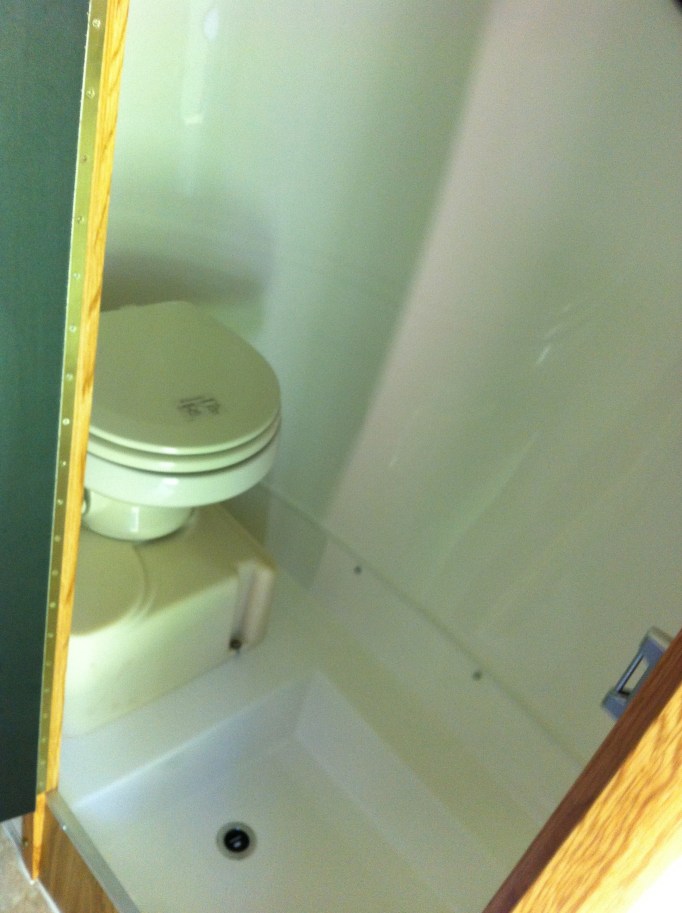
Scamp bathroom

Buy a Scamp, see the world

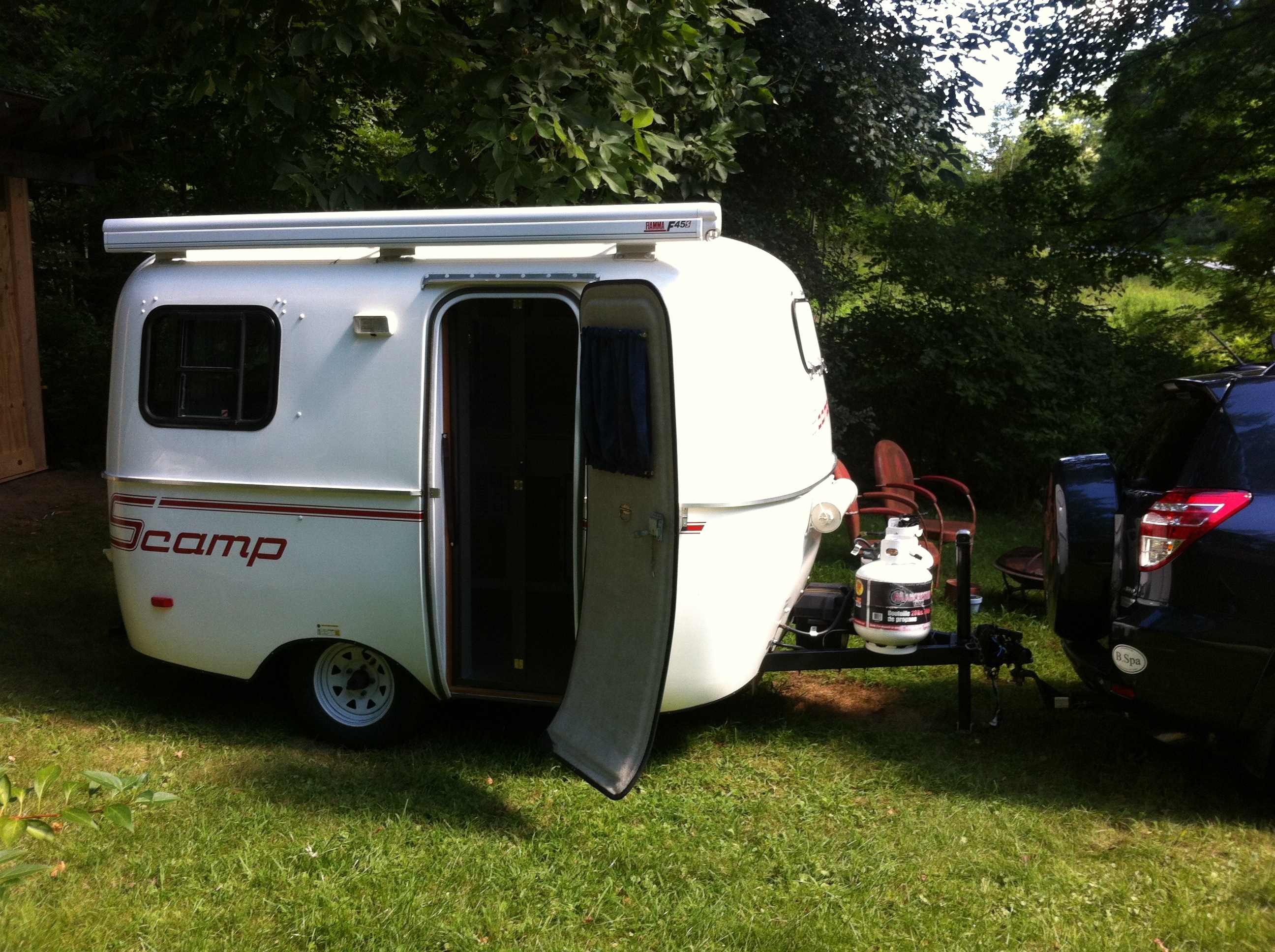
The Scamp

This is my trailer.

kitchen

My galley kitchen

I decided that I wanted to travel with Colby in the simplest manner possible, and not in some sort of monster truck. I did my homework. Steinbeck traveled with Charley in an early version of the RV–a camper affixed to a truck body. He named it Rossinante.

Fifty-three years later, it is mind boggling how much more there is to choose from: Fiberglass campers, aluminum campers, travel trailers, mobile homes, fifth-wheels, truck-bed set-ins, pop ups. I knew I wanted to be surrounded by something solid, for safety. And I knew I wanted to be able to untether my car, so that when I parked somewhere I could leave the trailer and go explore.

I searched online for deals. There are some fantastic little trailers out there. You can check out fiberglass trailers on the Web and read about some of the ones for sale. I really dug this one little Boler camper that I saw in New Jersey–I took my mom and dad with me to look, because I am mildly paranoid about going alone to visit people I meet on the internet. (Though how my parents, in their 80s, were going to help me if I landed in a nest of marauding cannibals is another matter.) This little Boler was awesome; it had been redone with a checkerboard floor and painted white and aqua, very retro looking.

But the truth is, I needed more than cute. I needed functional. I needed an actual bathroom, not a port-o-pot, and I needed everything in it to work. Another couple was there to see the Boler at the same time as me; they were about 15 years younger, they were more the type for buying something that would not quite work so that, when they get to be my age, they can appreciate the need to do the sensible thing. In any case, my search landed me in Thetford, Vt., where I purchased a 13-foot Scamp trailer that was just a year old from a guy named Warren.

Now, what was especially awesome about this purchase was that Warren came down on his price because he liked my project and was willing to barter. He is working on a website for people who give up drinking. He knocked off a thousand dollars so long as I agreed to provide four short profiles for his page. As of today, I have found two people I know who have given up booze and neither have consented to an interview–so if you are a sober person, preferably one who is famous, please contact me.

I knew I’d buy that Scamp even before I saw it. The day Suzanne and I went to look, during the tour a horrible sulfur smell escaped from somewhere deep inside the thing, but, it might have been Warren, I thought, who was a very nice, energetic, well-groomed guy but, hey, maybe he stank? Or it may have been coming from the Scamp fridge…because we found two Power bars in there growing mold… but it didn’t matter. Nothing mattered. It was my trailer.

I returned to pull it home, and spent a few hours dashing around to Walmart and U-haul and AutoZone, looking for an adapter for the trailer hitch, but, that just cemented my strange bond to Warren, who I like very much and feel connected to; he got this Scamp just a year ago as if he had been saving it for me. It is not easy to find a used Scamp, especially a newer one with a bathroom in it (instead of extra beds). Warren had used it, but, he and his wife had a baby and that meant they weren’t likely to use it again. And so in late August, adapter in place, money exchanged, promise to write about sober people made, I took my trailer home.

I am not as bookish as Steinbeck, I suppose, or maybe it’s just that our culture has changed so much, exchanged its high brows for lower ones. In any case, I christened the machine The Dog House.  I was ready to put me and my dog in it and hit the road.

Reasons for a Road Trip

Like Steinbeck, when he famously traveled the country with his dog Charley, my dog Colby and I set out on a trip. But also like Steinbeck, we quickly found that we needed to take care of a few things first. Steinbeck wrote, in “Travels With Charley,” that when the travel bug bites and “a man” (it was 1961) wants to hit the road, “the victim must find himself a good and sufficient reason for going.” Of course, someone imbued with the degree of wanderlust that Steinbeck and Charley and Colby and me are imbued with does not really need to put the reason into words, it’s just a thing that we long to do and given any opportunity, we will do it. But I have one good word to suffice: Sabbatical. I’ve been given a year of my life to pursue a few dreams with the security of knowing my job awaits when I return.

Earlier versions of my adventures did not end so well, because when I tried this before, within about a day of being alone on the road I was lonely, scared, and confused. In 1989 my friend known as Madeline told me at the Bozeman, Montana, airport as she stepped onto the tarmac to leave me there, “You stay on the road as long as you can.” Go have adventures, go see the world, go find whatever the hell you’re trying to find that is making you too crazy to be with. But I was 24, and I did not have a dog, and I had not made myself a map and did not have a purpose and did not have a job waiting for me anywhere. In short, I was lost. There is a certain amount of being lost that is crucial to a road trip, but when it is out of proportion, the journey is doomed. And so in 1989, the day after Madeline left, I turned tail and started for home, which was New Jersey.

It is now–and I really can’t believe this–about 24 years later. I am twice the age I was when I seemed to have nothing but time. And for the first time in my life I really do have time, and along with that I have just enough money, and I have spent the past 24 years learning how to use it–the time, I mean; I try not to use the money too much. The purpose of my sabbatical is to explore America’s industrial ruins–cities that are past their glory days, and struggling to retain their identity, or remake it. (Golly; does that sound a little bit like a metaphor for me? Well, read on. We’ll see.) I need to learn to use the internet and social media as a journalist, which required having a focus, and dying cities is the subject I picked. Just is. Maybe that metaphor thing was at play in my mind (words of wisdom returned to me from the student I gave them to a couple years ago: “Does your narrator ‘want’ something? Of course she does…) But in any case, armed with this mission and inspired by Steinbeck (and a million thanks to Gail Howard, for handing me the book on CD before I left for a drive back in June), I decided to visit those places in one big, long swoop, in a trailer, with my dog at my side, to combine a personal adventure with that professional one.

Here are a few tips if you are thinking of embarking on a similar adventure:

  • Have a partner who is also a writer, and who will support you 100%–thank you, Suzanne Parker.
  • Be sure to thank the rest of your family because they helped, I’m sure; thanks, mom and pop.
  • Dogs make good companions, but any pet will do. A horse might come in handy.
  • Have a good reason to go, but be willing to change it once you get started; more on that later.
  • Be absolutely sure that you are fully prepared…because without planning, you’ll probably fail.