
About 11 percent of West Virginians are veterans. In my family of origin, 33 percent are vets. Dad served; me and mom, no. See, numbers are tricky.
But I thought maybe census data could explain Beckley, West Virginia, the place I spent veterans day. In the U.S., less than 10 percent of the population over 18 has served in the military, so it seems meaningful that West Virginia beats the average and Beckley, West Virginia, is home to an even higher number—12 percent of the population has served.
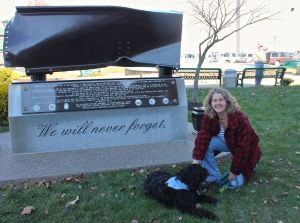
In New Jersey—where I grew up and where my dad the Navy vet still lives—when you say “veteran,” chances are you’re talking about a senior citizen. A third of the vets are over 75. No one gets drafted anymore, so it’s not surprising that the number of older vets is higher than younger ones—back in the day, service wasn’t a choice.
But when you say “veteran” in West Virginia, there’s a better than average chance you’re talking about someone who has served in the current generation of soldiers—someone who joined since 1990, who is younger than, say, me, who has been to the Gulf and Afghanistan.
In a way, the numbers show how our country is becoming two places, and the gulf between us is widening. Why do more people serve in towns like Beckley, West Virginia? Job opportunities play a part, and so does the truth that people here are much more accustomed to guns in general; walking in fields with rifles starts young.People here will tell you, though, that it’s in the culture, to serve. It’s a growing part of what is valued. God and country and family: take these things seriously.
None of that is especially surprising, I know.
But what I’ve felt, as I’ve traveled through places like Missouri, Kentucky, Iowa, Indiana, Ohio, and now West Virginia—all places where better than 10 percent are veterans—is that when people believe things in these places, they believe with whole hearts. Whole hearts, made-up minds, determination.
And numbers can’t back me up on the “why” part of all this but still, I sense that the need to believe in something is great here for good reason. The need is great enough to match the size of some great and very visible disappointments.
There’s the thing: look at the shrinking populations, the lost industries, the abandoned properties all over the landscape. Look at methamphetamine. Seriously, don’t close your eyes to that. Look at the downtowns that were built when America was young and believed in itself, and how they have been emptied, gutted, abandoned. What is left as proof of our character—something we can recognize and understand?
Military service is a higher calling of sorts and it doesn’t mess around, just like Jesus doesn’t mess around, and wedding vows are meant to last — 22 states (including West Virginia and all the other states I listed above) have introduced “covenant marriage laws” to keep it that way; three states have such laws on the books.I believe I understand some of this.
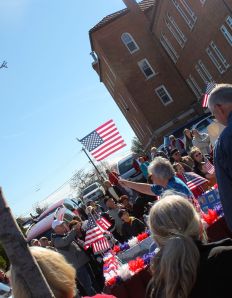
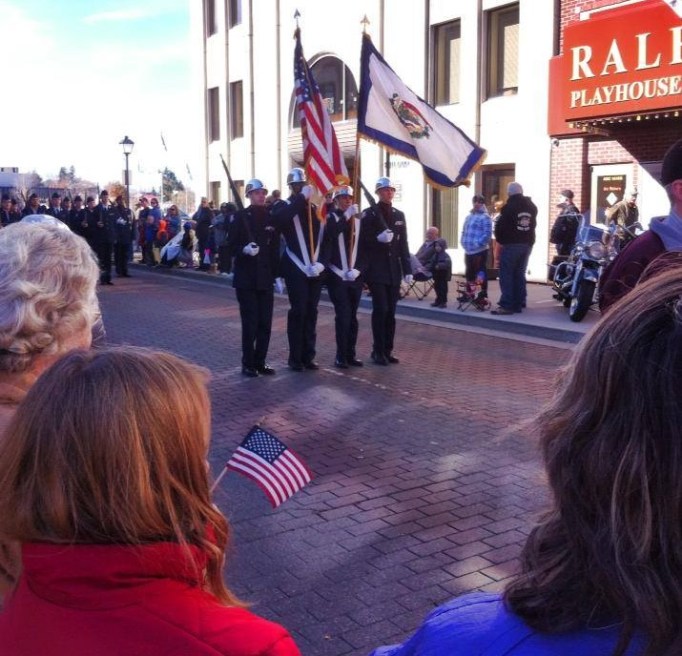
I feel that craving for higher purpose viscerally—as in, when the color guard comes down Main Street and the high school marching band bangs out God Bless America and chubby girls spin their flags, I start to cry.
Yeah, I actually do cry and I can’t help it.
The need to believe is great. I feel it too. Where I begin to drift away—drift back home, back East, where patriotism seems too lock-step for people more comfortable with books than guns—is on this little detail: Killing. Violence in the world is not a healthy thing for us to count on, in terms of building American self-esteem.
When will it be possible to believe in something that builds us up? Like, maybe, teaching? Like, maybe, love?
 Travels with Colby